



Tembo Charge: fleet charging and site energy
Power where the work is.
Charging and site energy for electric fleets: fixed and mobile DC, battery storage and off-grid power, planned around the way your fleet works.
The vehicle is half the system. This is the other half.
Tembo Charge brings together everything between the grid, or the lack of one, and the vehicle: fixed and mobile charging, battery storage and off-grid power. Each part is planned alongside the fleet, so vehicles and energy work as one system.
Vehicles, charging and site energy planned together by one team.
Sized around how the fleet actually works, not the biggest number on a datasheet.
From established depots to remote sites the grid has not reached.
Start with what the first vehicles need and add capacity as the fleet grows.
Three chargers. One system.
Wall-mounted and floor-mounted DC where fleets return, and the Tembo 03 mobile charger for everywhere else. Each one is matched to the fleet it serves.
 Fixed DC
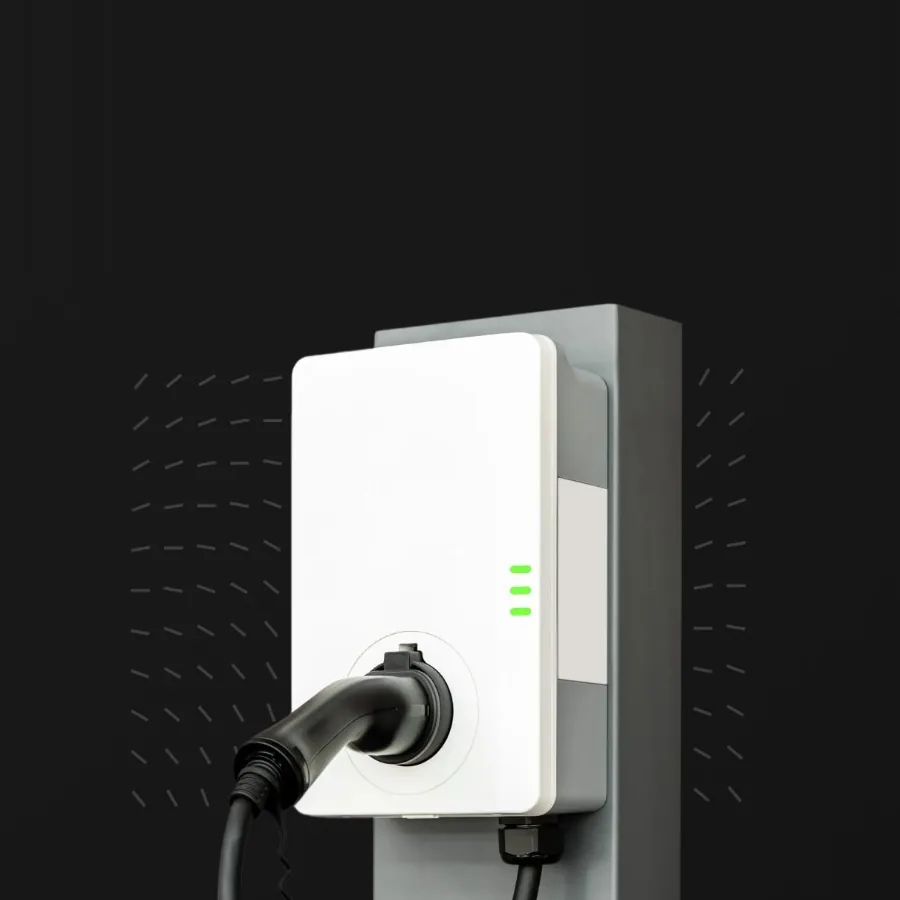
Wall-mounted DC charger
High performance. Small footprint.
Compact DC charging for depots and industrial hubs.
- Output
- 40 kW DC
- Voltage range
- 200–1000 V
- Access control
- RFID / app / password
- Enclosure
- Industrial grade
 Fixed DC
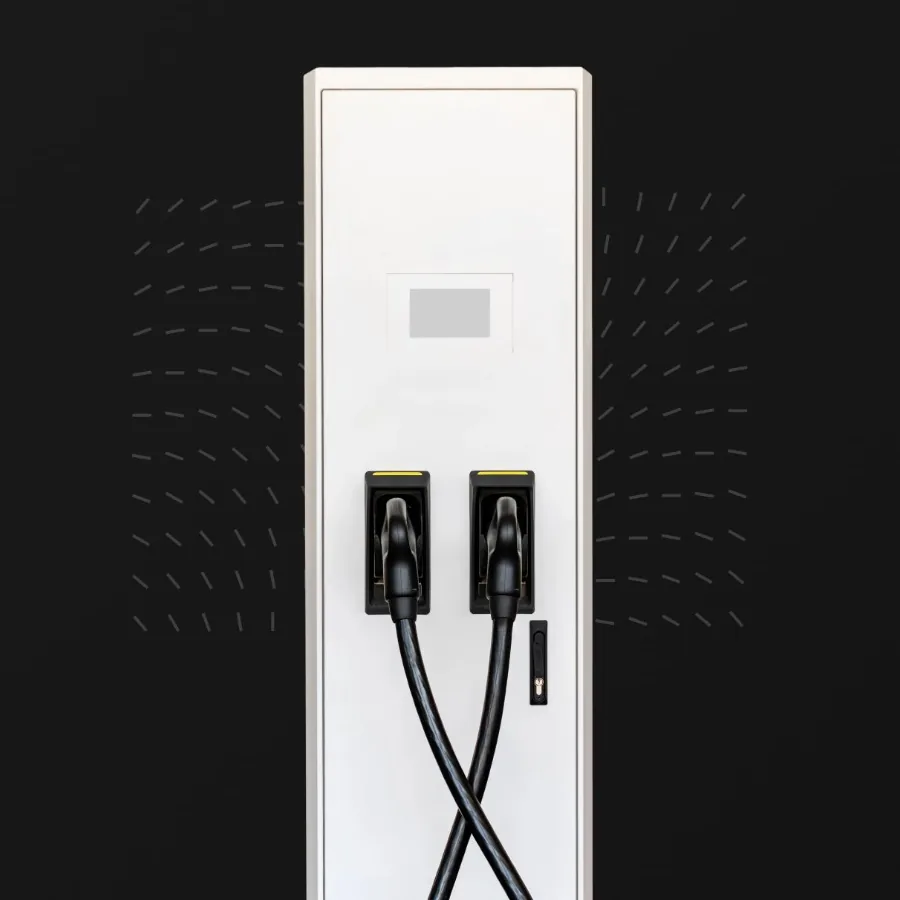
Floor-mounted DC charger
Heavy-duty power for heavy-duty fleets.
Fast turnaround at the bay, with seamless integration into on-site energy systems.
- Output
- 80 kW DC
- Connectors
- Dual gun
- Voltage range
- 200–1000 V
- Build
- Rugged, weather-resistant
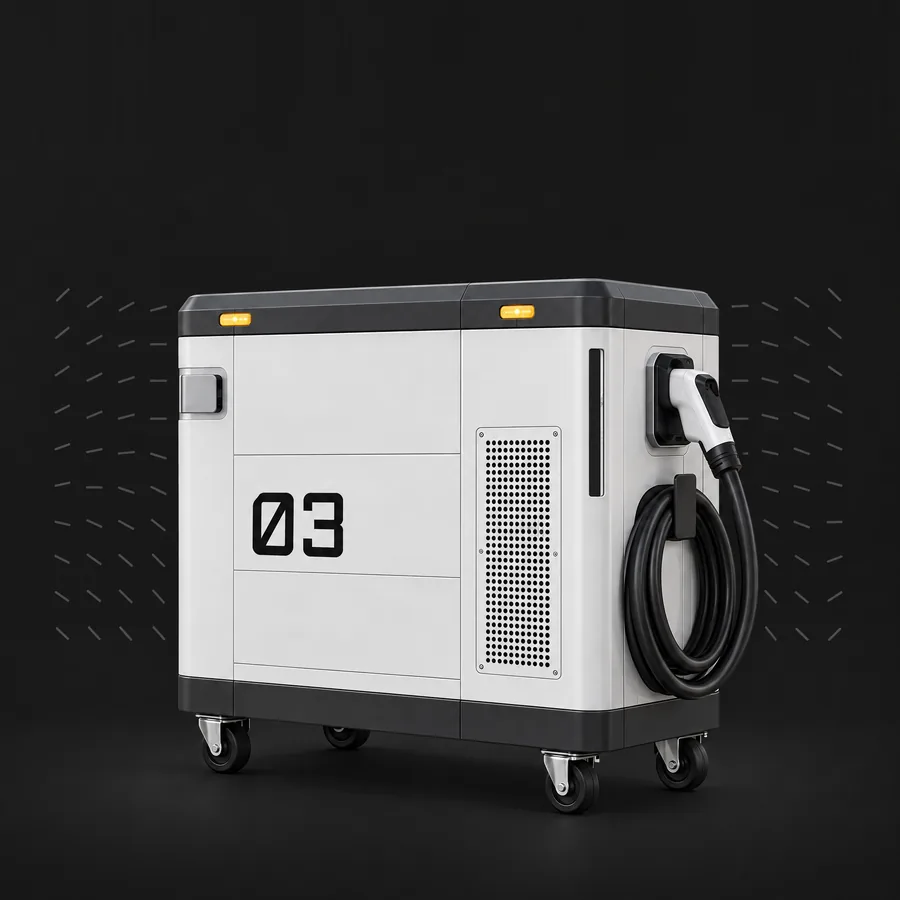 Mobile DC
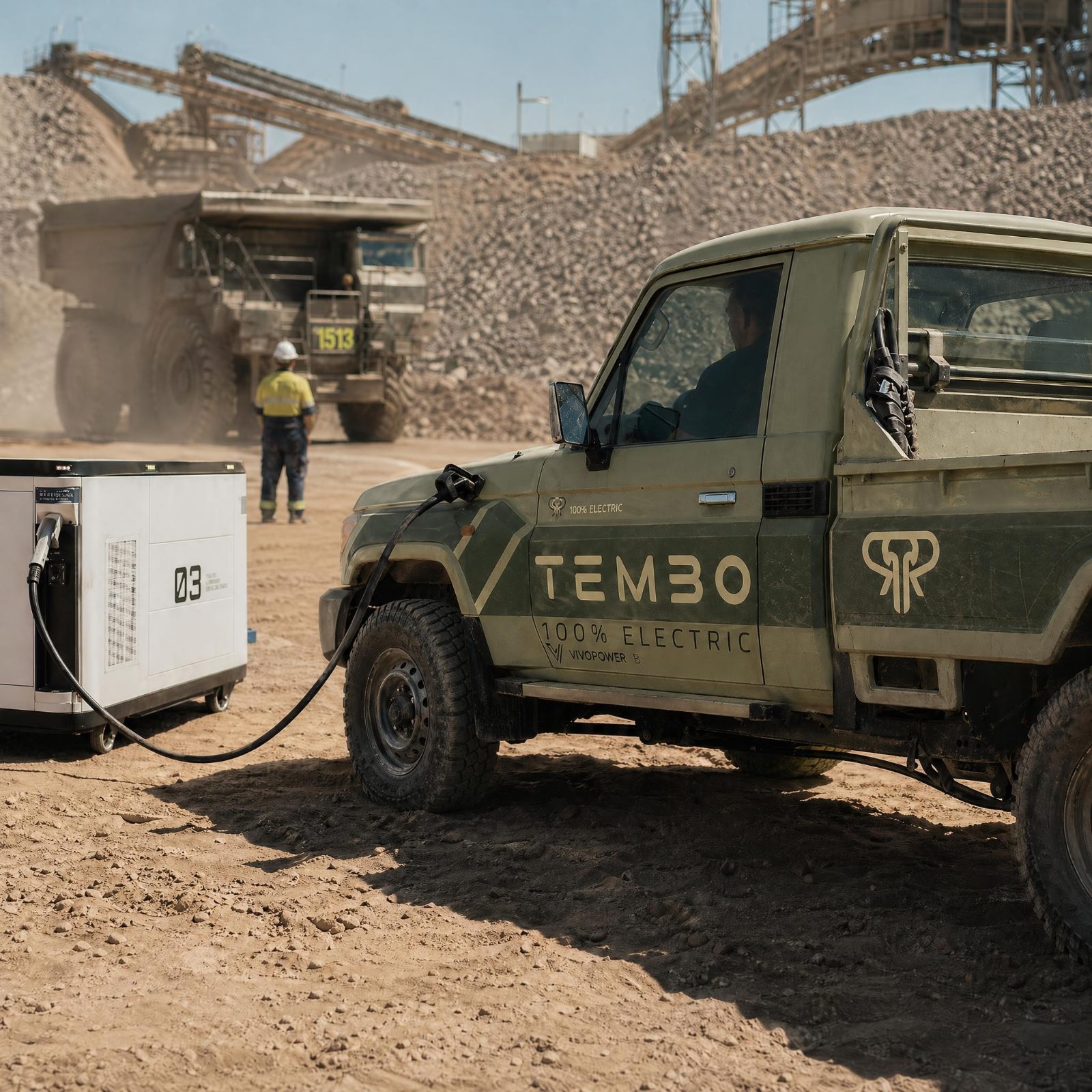
Tembo 03 mobile charger
Fast. Flexible. Field-ready.
Bring 120 kW fast charging anywhere your fleet operates.
- Output
- 120 kW DC
- Standards
- CCS / CHAdeMO / GB/T
- Activation
- QR / RFID / card
- Operating range
- −20 °C to +50 °C
Indicative specifications. Final configuration is confirmed with the site assessment.
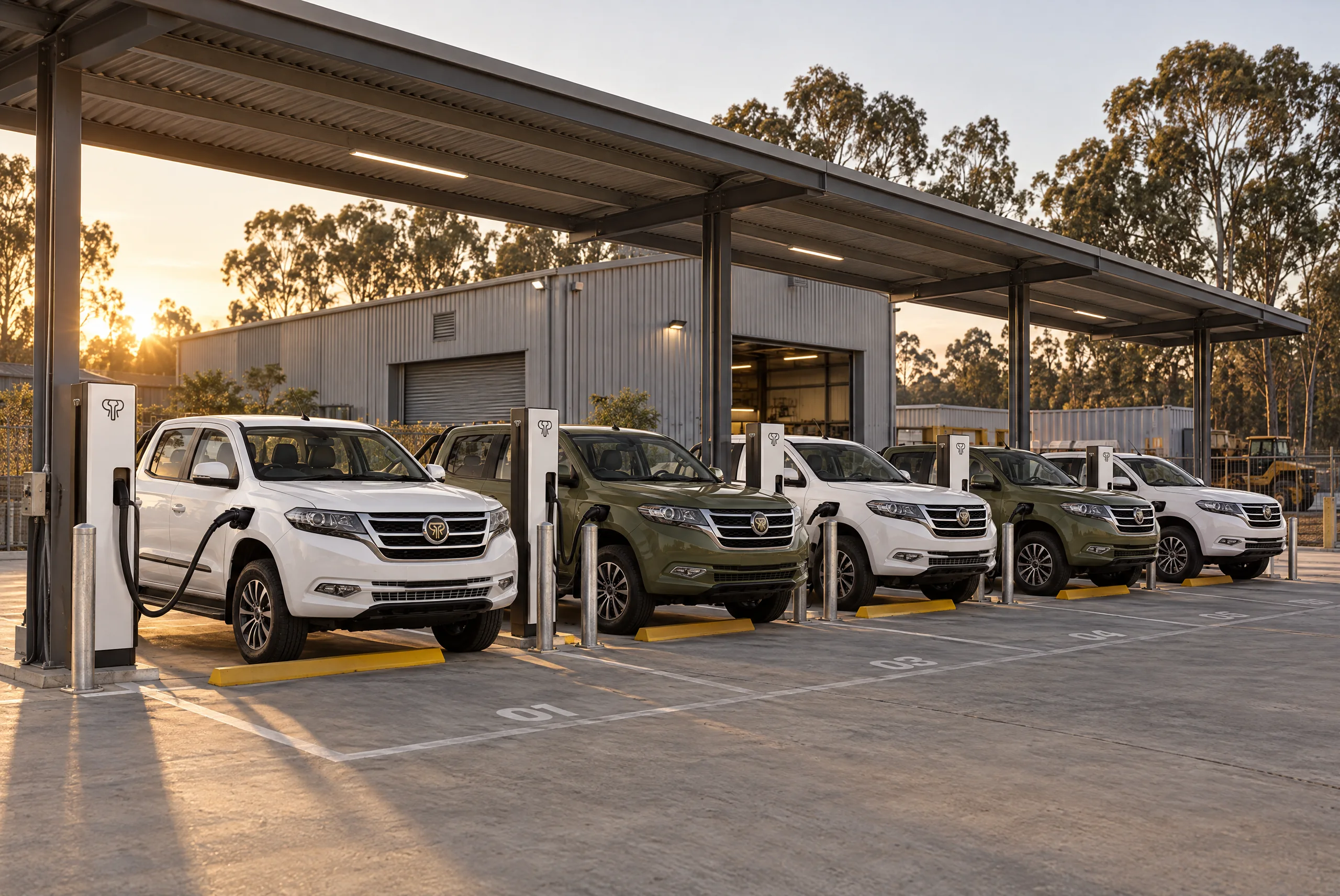
Fixed DC where fleets return.
DC charging where vehicles already stop: the depot, the yard, the shift change. Bays are sized around how long vehicles actually stay, so the fleet tops up in the gaps it already has.
- Shift-change top-upsFast DC top-ups fit into the breaks the fleet already has, so vehicles spend less time waiting.
- AC for the overnight windowMost of a fleet’s energy goes in parked overnight at lower power. DC is for the exception.
- Balanced across baysCharging can be balanced across the bays, so the connection is sized for the fleet’s day rather than every charger at once.
- Room to growStart with the bays the first vehicles need and add more as the fleet grows.
A day on one bay
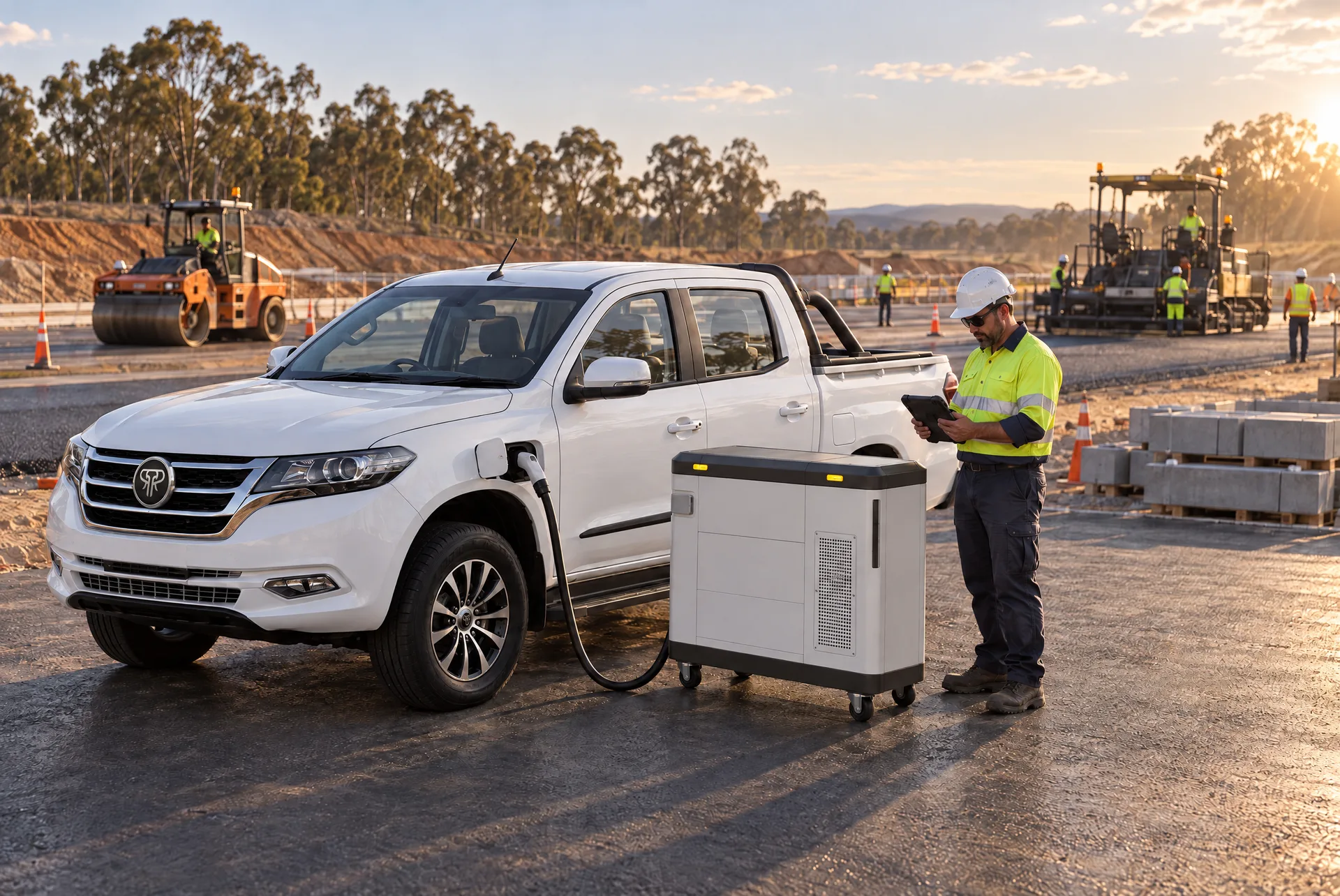
Two-shift operation · indicativeTake the charger to the work.
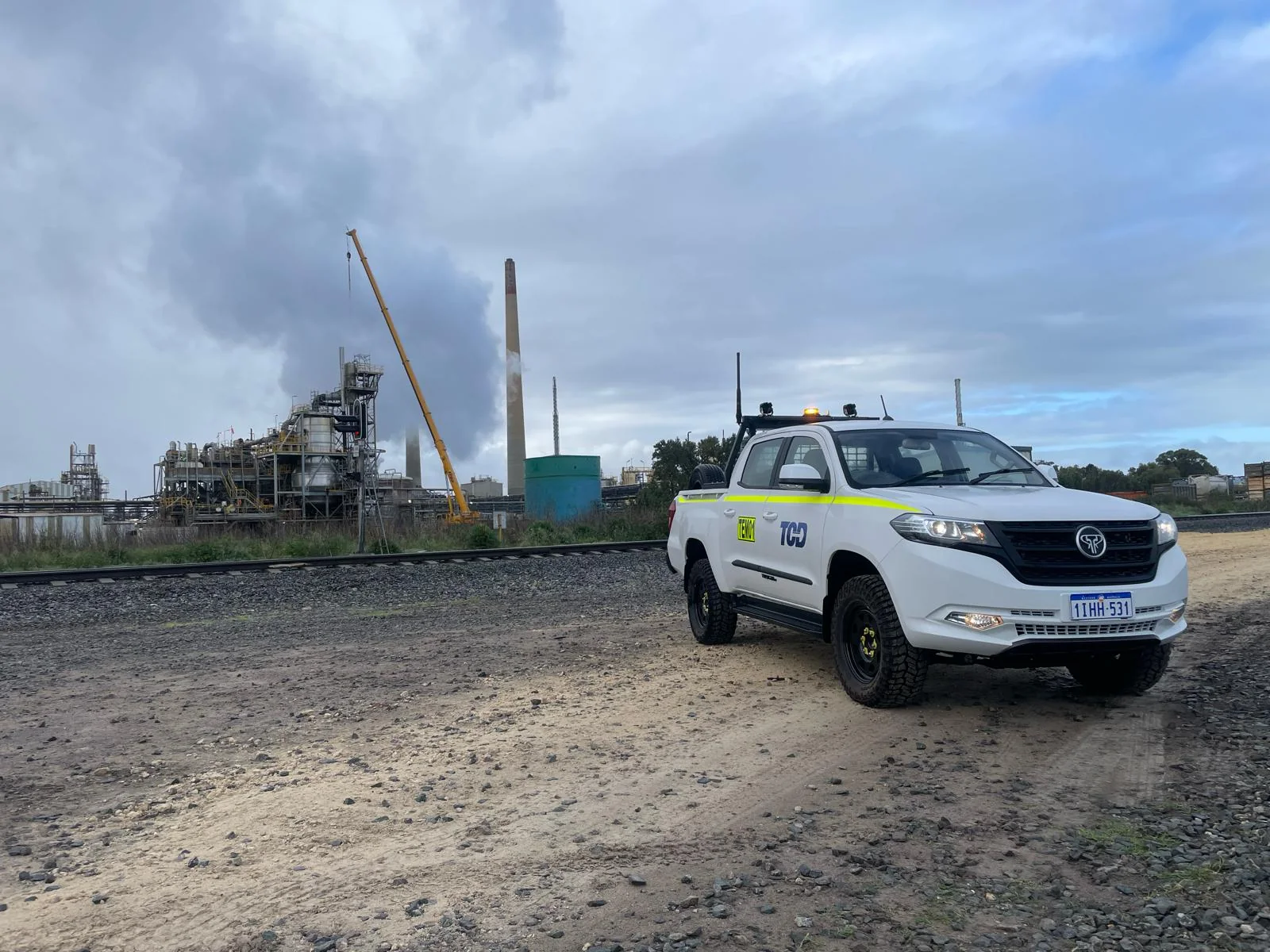
The Tembo 03 is DC fast charging on wheels. It brings charging to where vehicles are working, so a long drive back to the depot becomes a short stop on site.
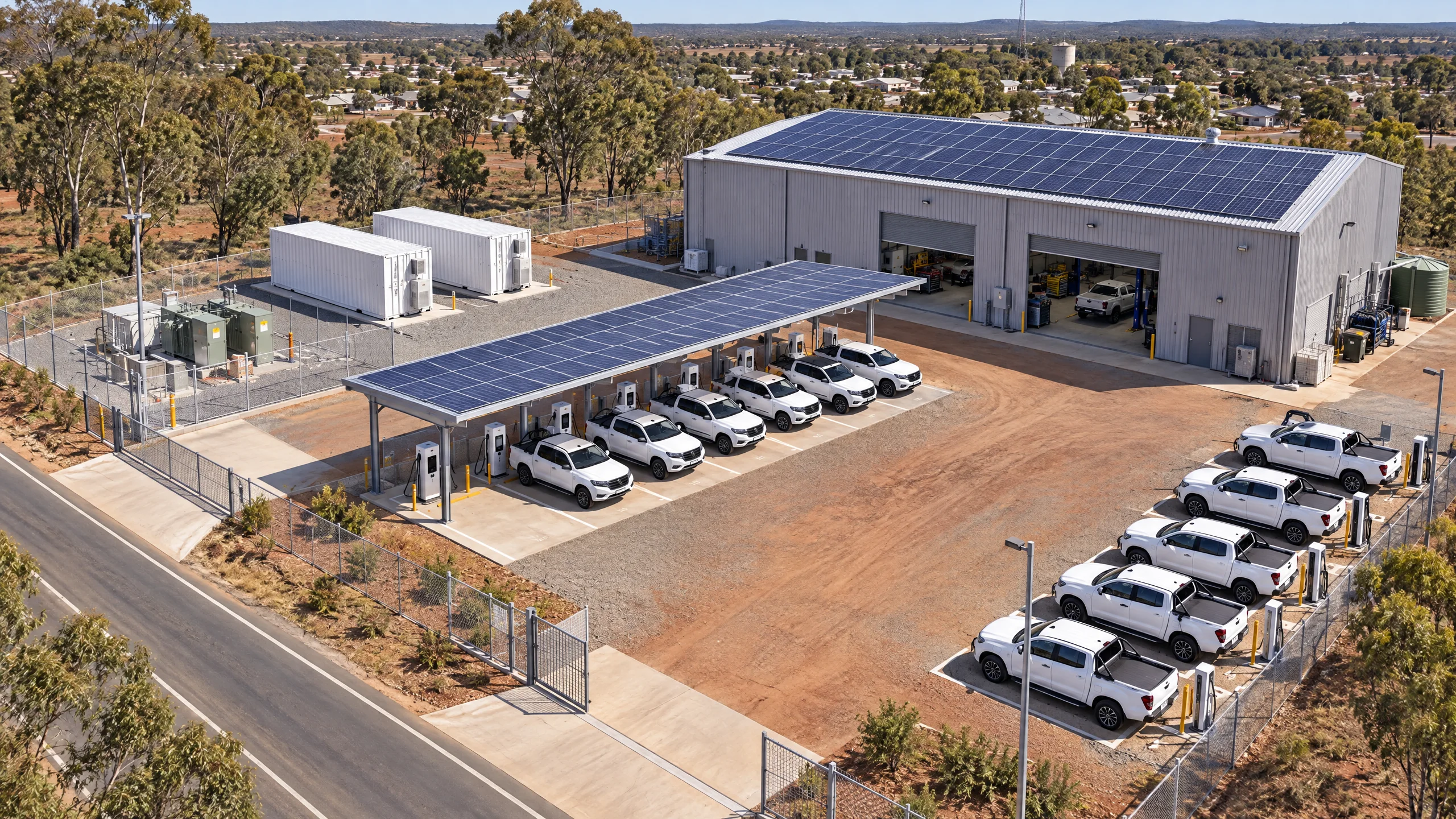
One site, not a row of chargers.
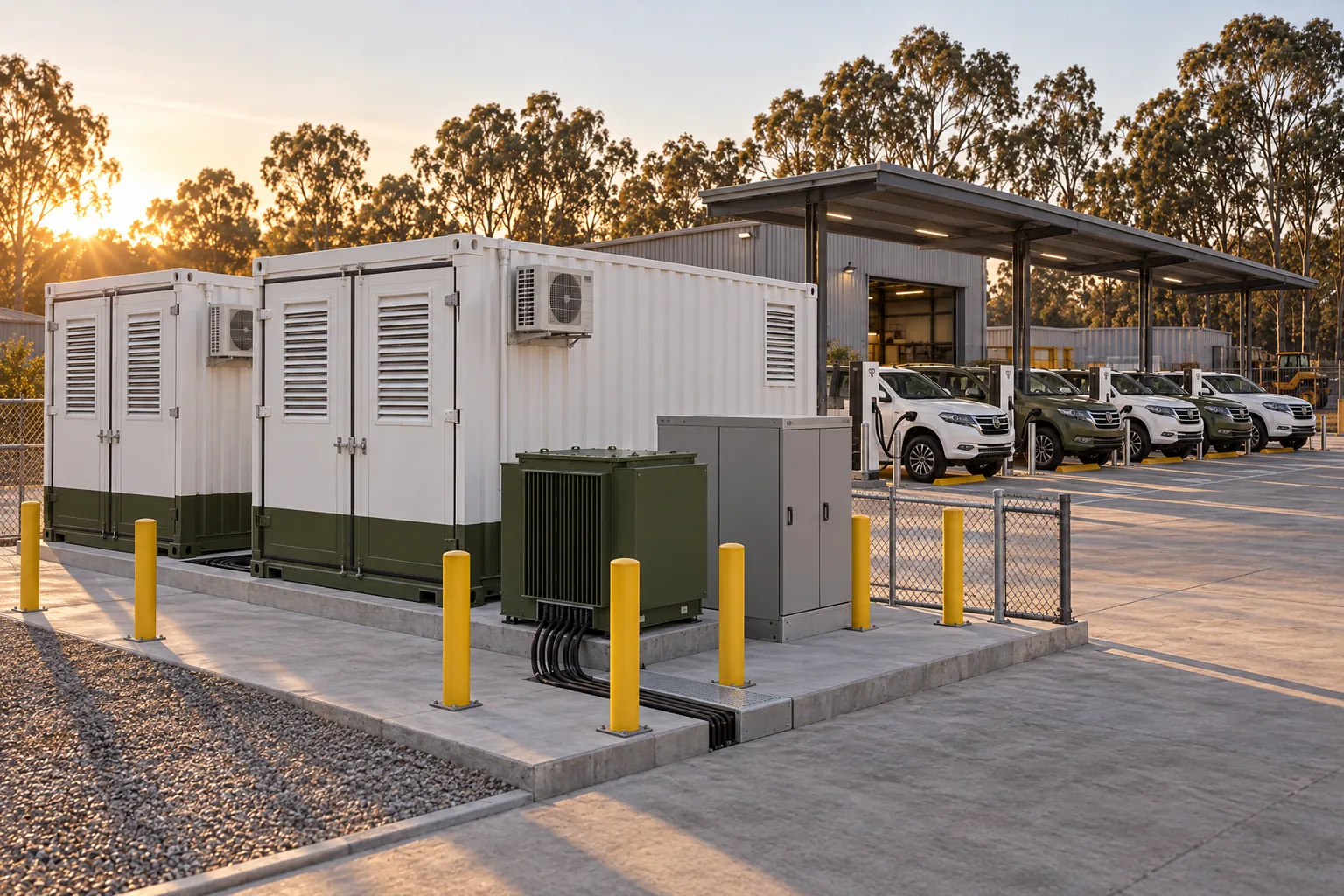
Before anything is installed the depot is planned end to end: where the connection comes in, where storage sits, how many DC and overnight bays the duty cycle needs, and what the roofs can generate. It works on day one and leaves room for the next tranche of vehicles.
Storage for constrained grids.
A depot connection that cannot carry every bay at once does not always need an upgrade sized for one hour of the day. Often it needs somewhere to keep energy until the fleet comes back. Storage smooths the peaks and helps keep power available while the grid catches up.
The battery delivers about 150 kWh across the two peaks and refills in the overnight and midday lulls, so grid draw never crosses the 300 kW limit.
View the data as a table
| Hour | Site demand | Grid draw with storage | Battery |
|---|---|---|---|
| 00:00 | 145 kW | 145 kW | — |
| 01:00 | 140 kW | 141 kW | +1 kW |
| 02:00 | 132 kW | 153 kW | +21 kW |
| 03:00 | 120 kW | 159 kW | +39 kW |
| 04:00 | 105 kW | 131 kW | +26 kW |
| 05:00 | 95 kW | 98 kW | +3 kW |
| 06:00 | 98 kW | 98 kW | — |
| 07:00 | 108 kW | 108 kW | — |
| 08:00 | 112 kW | 112 kW | — |
| 09:00 | 104 kW | 118 kW | +14 kW |
| 10:00 | 96 kW | 134 kW | +38 kW |
| 11:00 | 94 kW | 120 kW | +26 kW |
| 12:00 | 100 kW | 101 kW | +1 kW |
| 13:00 | 158 kW | 158 kW | — |
| 14:00 | 387 kW | 300 kW | −87 kW |
| 15:00 | 274 kW | 274 kW | — |
| 16:00 | 172 kW | 172 kW | — |
| 17:00 | 177 kW | 177 kW | — |
| 18:00 | 243 kW | 243 kW | — |
| 19:00 | 360 kW | 300 kW | −60 kW |
| 20:00 | 309 kW | 300 kW | −9 kW |
| 21:00 | 205 kW | 205 kW | — |
| 22:00 | 171 kW | 171 kW | — |
| 23:00 | 158 kW | 158 kW | — |
Sites beyond the network.
Remote sites and new projects often have no grid connection, or none for years. Solar, storage and charging come together as one self-contained system, sized to the fleet and the site, so electrification does not have to wait for a transmission line.
- Solar generation
- Battery storage
- DC charging on site
- One planned system
Run the numbers on your own fleet.
Four inputs, an indicative answer. Move the sliders to see what diesel is costing you in fuel and maintenance each year, and how quickly the switch pays back.
Not counted here
Ventilation load, carbon pricing, fuel haulage and downtime. On most sites those move the number further in your favour.
Fuel and maintenance, whole fleet
After a 1.6-year payback
Fuel saved a year
Servicing saved a year
CO₂ avoided a year
Held constant: 260 operating days (5 a week), 12 L/100km diesel vs 23 kWh/100km electric, maintenance $0.18 to $0.06/km, $20k capex premium per vehicle. Charging infrastructure is sized separately in an assessment. Indicative only.
From survey to switch-on.
One team specifies the vehicles, the charging and the site energy, so the parts are designed to work together rather than bought separately and hoped for.
- 01Duty-cycle callDistances, shift patterns, terrain and where your vehicles sit idle.
- 02Size the systemVehicles, charging and storage are specified together against that profile, so nothing is over-bought or under-powered.
- 03Site surveyConnection capacity, layout, roofs and ground conditions, checked on site once the numbers stack up.
- 04Install in stagesConnection, storage, bays and chargers go in so the fleet runs from the first bay, not the last.
- 05Operate and supportOne team supports the vehicles and the charging as the fleet grows.
Charging, asked.
Do we need charging infrastructure before we can start?
Not necessarily. Charging can be phased in with the first vehicles, and mobile charging can bridge the gap while fixed bays are planned and installed. Tembo plans charging and site energy around the same duty cycle as the vehicles, including storage where the grid is constrained or has not arrived yet.
How long does a vehicle take to charge?
It depends on the vehicle, the charger and how much energy the next shift needs. Most fleets charge overnight at lower power and use DC fast charging for top-ups between shifts. Your assessment sets out a charging plan for your vehicles and your site.
Our grid connection is limited. Do we need an upgrade?
Not always. Balancing charging across the bays and adding battery storage can let an existing connection support more of the fleet than the sum of the charger ratings suggests. The assessment models it against your actual demand before anything is quoted.
Can you charge vehicles where there is no grid at all?
That is what off-grid systems are for: solar generation, battery storage and charging, sized to the fleet and the site. Mobile charging can also cover the period before a permanent connection is in place.
Who looks after the chargers once they are installed?
Tembo supports the charging system alongside the vehicles, from commissioning onwards, so the whole fleet has one partner.
Latest on fleet charging.

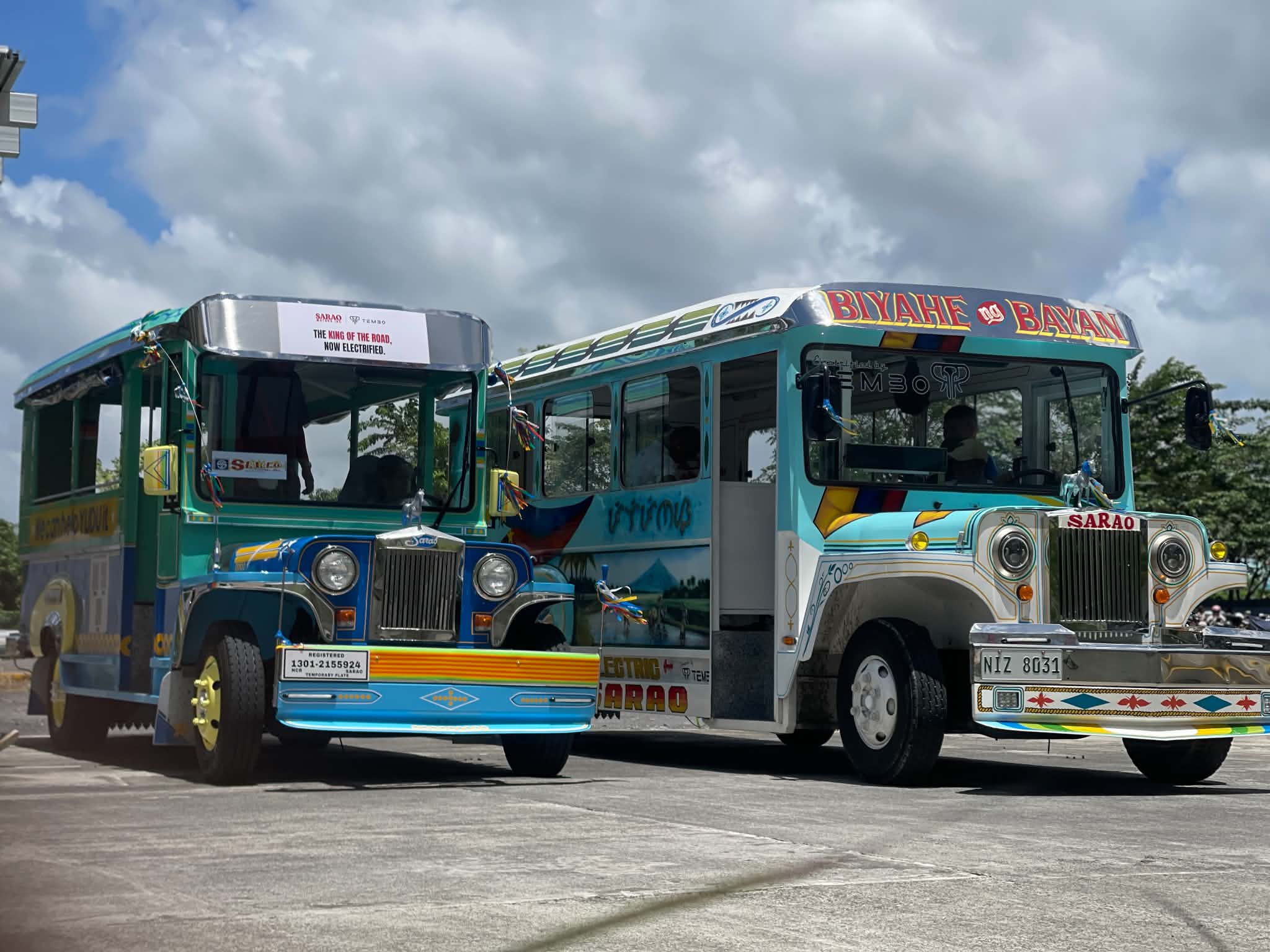
Electric Jeepney Pressure-Tested Over 760 km of Intercity Travel
An 82 kWh Sarao–Tembo electric jeepney ran from Metro Manila to the Bicol Region and back. Here is what the data showed.
Read more
How to Maintain and Extend the Life of Electric Utility Fleets
How to maintain electric utility fleets and extend their life, from battery charging and brakes to tyres, cooling systems, telematics and driver training.
Read more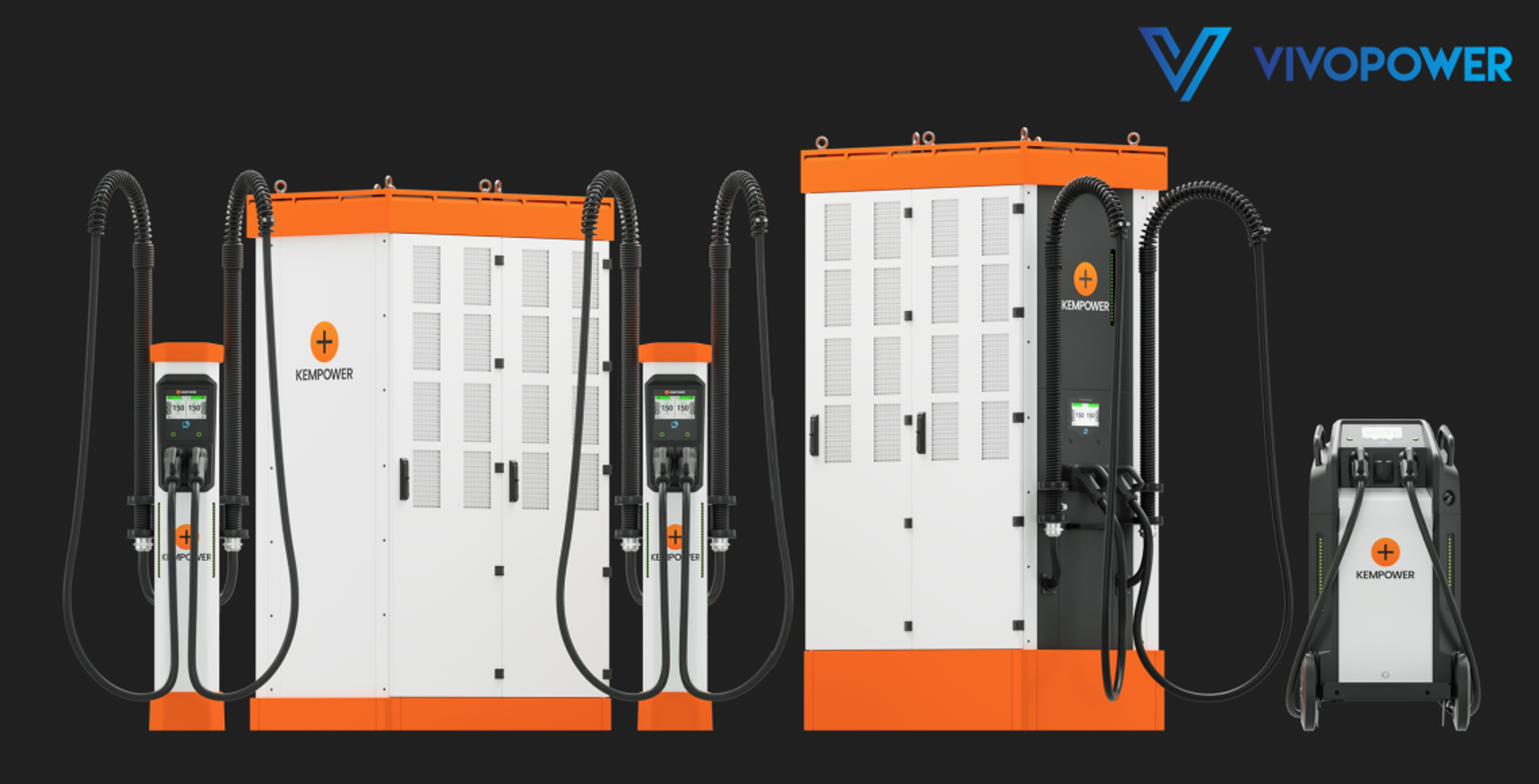
VivoPower Announces Definitive Distribution Agreement to Distribute EV Fleet Charging Solutions
VivoPower signs a definitive agreement to distribute Vital EV and Kempower fleet charging solutions globally, complementing Tembo EV conversion kits.
Read moreLet's size the energy for your site.
Tell us how the fleet works and what the site has to give. Our engineers come back with an indicative charging, storage and cost model, not a brochure.
A 30-minute duty-cycle call
Distances, shift patterns, terrain and where your vehicles sit idle.
An indicative system and model
Vehicles, charging and storage sized to your site, with the numbers behind them.
A site survey, if it stacks up
We only go to survey when the economics and the operation both work.
Request received
We reply within two business days. The more you tell us about the site connection and the shifts, the more useful the first call is.