
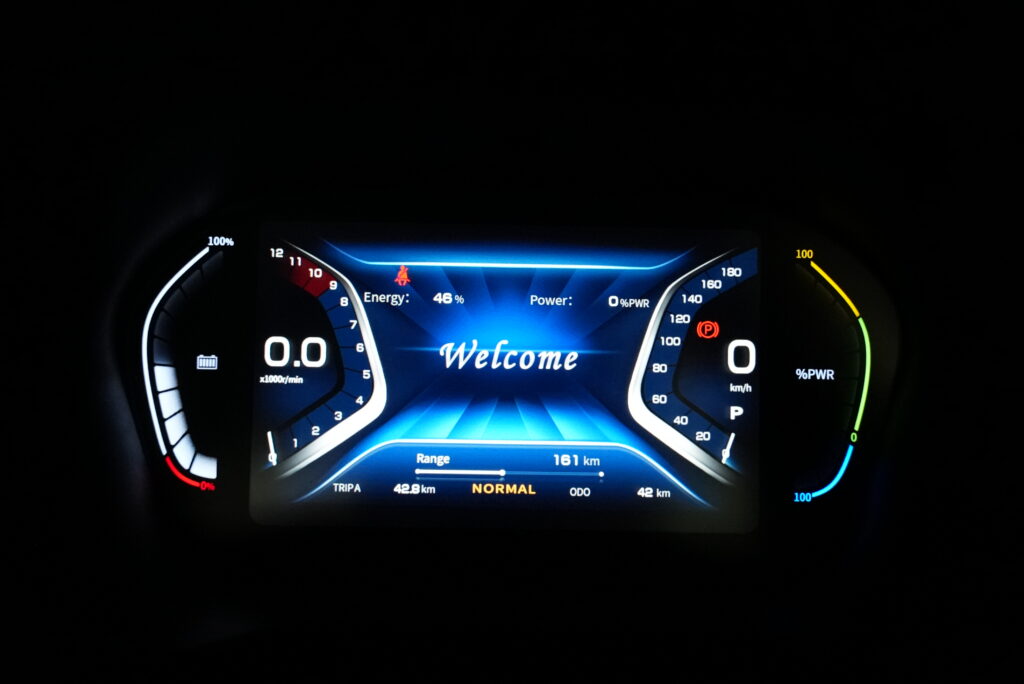
Electric fleets have become a cornerstone of corporate sustainability strategies as businesses worldwide commit to ambitious net-zero targets.
If your company has pledged to reduce carbon emissions, you are probably asking yourself how to actually make that happen. Where do you even start? And how do you balance environmental responsibility with operational efficiency?
These concerns are completely valid. Decarbonisation sounds straightforward on paper, but implementing meaningful changes requires careful planning and the right solutions.
Businesses today face mounting pressure from multiple directions. Investors increasingly evaluate companies based on Environmental, Social, and Governance criteria. Major institutional investors now require detailed sustainability disclosures before committing capital.
Customers prefer brands that demonstrate genuine environmental commitment, and surveys consistently show willingness to pay premium prices for sustainable products and services.
Governments continue tightening emissions regulations with penalties for non-compliance. Many jurisdictions have announced bans on new internal combustion vehicle sales within the coming decades. Companies that delay their transition may find themselves scrambling to comply with regulations that seemed distant just years earlier.
The transportation sector contributes significantly to global greenhouse gas emissions. For companies operating vehicle fleets, this represents both a challenge and an opportunity.
Fleet vehicles often account for a substantial portion of an organization's total carbon footprint. Addressing fleet emissions can therefore make a meaningful impact on overall sustainability performance.
According to the Global EV Outlook from the International Energy Agency, electric vehicle adoption is accelerating globally as organizations recognize that electrification offers a practical pathway to decarbonisation.
The most obvious benefit of electric fleets is the elimination of tailpipe emissions. Unlike diesel or petrol vehicles, electric vehicles produce zero direct emissions during operation. This immediately reduces a company's Scope 1 emissions, which are direct emissions from owned or controlled sources.
But the benefits extend beyond direct emissions. Electric vehicles are inherently more energy efficient than internal combustion engines. While traditional engines convert only about 40% of fuel energy into movement, electric motors achieve efficiency ratings above 90%. This means less energy wasted as heat and more productive use of every unit of power.
When paired with renewable energy sources for charging, electric fleets can achieve near-zero emissions across their entire operational cycle. Companies that invest in solar installations or purchase renewable energy credits can further reduce the carbon intensity of their fleet operations.
Transitioning to electric fleets aligns with circular economy principles that many sustainability frameworks now emphasize. Rather than the traditional linear model of take, make, and dispose, a circular approach focuses on extending product lifecycles and minimizing waste.
Fleet conversion programs exemplify this approach perfectly. Instead of scrapping existing vehicles and manufacturing entirely new ones, conversion kits transform diesel vehicles into fully electric units. This extends the useful life of proven chassis while eliminating emissions. The process requires fewer raw materials than producing new vehicles from scratch.
Companies like Tembo ELV support this model by providing sustainable mobility solutions that help fleet owners electrify without replacing their entire vehicle inventory. This approach reduces waste, conserves resources, and still delivers the environmental benefits of zero-emission operation.
One challenge many organizations face is accurately measuring and reporting their emissions reductions. Electric fleets simplify this process considerably. Energy consumption can be precisely tracked through charging data, making it straightforward to calculate associated emissions based on local grid carbon intensity.
Modern fleet management systems provide detailed analytics on vehicle usage, energy consumption, and operational efficiency. This data supports credible ESG reporting and helps organizations demonstrate tangible progress toward their stated goals. Transparency in reporting builds trust with stakeholders and avoids accusations of greenwashing.
Research from Rocky Mountain Institute on how fleets can electrify confirms that data-driven approaches help organizations make informed decisions about their transition strategies.
Electric fleets are proving their value across diverse sectors. Mining companies face particular scrutiny regarding environmental impact and are adopting electric vehicles to reduce underground emissions and improve worker safety.
Underground operations benefit enormously from zero-emission vehicles that eliminate the need for costly ventilation systems to remove diesel exhaust. The importance of battery safety in these demanding environments cannot be understated.
Agriculture operations benefit from quiet, emission-free vehicles that reduce environmental impact on farmland while lowering operating costs. Farmers can work early mornings or late evenings without disturbing neighboring properties. The absence of exhaust fumes also improves conditions for workers and livestock alike.
Infrastructure and utility companies appreciate vehicles that can work in residential areas without creating noise or air quality concerns. Electric vehicles allow crews to operate in noise-sensitive environments like hospitals, schools, and residential neighborhoods without complaints.
Government and defense agencies are transitioning fleets to meet public sector sustainability mandates while reducing long-term fuel costs for taxpayers. Features like V2L technology provide additional operational flexibility for field operations.

The business case for electric fleets extends beyond environmental benefits. Many governments offer incentives including tax credits, grants, and preferential treatment for organizations investing in zero-emission vehicles.
These programs can significantly offset the higher upfront costs of electric vehicles. Some regions offer rebates that reduce purchase prices by tens of thousands of dollars per vehicle.
Lower operating costs also contribute to financial sustainability. Electric vehicles require less maintenance than diesel equivalents due to fewer moving parts.
There are no oil changes, fewer brake replacements thanks to regenerative braking, and no exhaust system components to replace. Fuel costs become more predictable and typically lower when switching from volatile petroleum prices to electricity rates.
Organizations that charge vehicles during off-peak hours can take advantage of lower electricity rates, further improving the economics. Some utility companies offer special commercial rates for fleet charging that make electrification even more attractive.
Insurance premiums may also decrease for organizations demonstrating commitment to safety and sustainability. Some insurers offer favorable rates for electric fleets due to their safety characteristics and the perception that sustainability-focused companies represent lower overall risk.
Achieving net-zero through fleet electrification requires thoughtful planning. Geotab's guide on fleet electrification recommends starting with a comprehensive assessment of current operations and emissions.
Many organizations begin with pilot programs, converting a portion of their fleet to evaluate real-world performance before committing to full transition. This approach allows teams to develop expertise and refine processes while managing risk.
Consider your charging infrastructure requirements early in the planning process. Existing electrical systems may support fleet charging with minimal upgrades, particularly when vehicles charge overnight during off-peak hours.
The transition to electric light vehicles does not need to happen all at once. A phased approach aligned with normal vehicle replacement cycles minimizes disruption while steadily progressing toward net-zero goals.
Meeting net-zero targets requires concrete action, not just commitments. Electric fleets represent one of the most practical and impactful steps organizations can take toward meaningful emissions reduction. They deliver measurable results that support credible sustainability reporting.
The technology has matured to the point where electric vehicles can handle demanding commercial applications reliably. Charging infrastructure continues expanding. Financial incentives make the transition increasingly attractive.
Electric fleets offer more than environmental benefits. They position organizations as leaders in sustainability, attract environmentally conscious customers and employees, and demonstrate genuine commitment to building a cleaner future through electric fleets.
The reduction depends on fleet size and usage patterns, but transitioning to electric vehicles can eliminate 100% of direct tailpipe emissions. When combined with renewable energy for charging, total lifecycle emissions can decrease by 60% or more compared to diesel equivalents.
Yes. Electric vehicles provide precise, trackable data on energy consumption that simplifies emissions calculations. This data supports transparent and credible sustainability reporting, helping organizations meet investor and regulatory expectations for ESG disclosure.
Environmental benefits begin immediately upon deployment. Each electric vehicle eliminates tailpipe emissions from its first day of operation. Over time, cumulative emissions savings grow substantially, particularly for high-usage fleet vehicles.
Absolutely. Electric utility vehicles are specifically designed for demanding industrial environments including underground mining operations. They improve air quality for workers while eliminating emissions in enclosed spaces where ventilation is costly.
Charging infrastructure determines how effectively electric fleets can operate. When powered by renewable energy, charging infrastructure maximizes emissions reductions. Many organizations install on-site solar to create fully sustainable charging solutions.
© Copyright 2026 Tembo e-LV BV | Privacy Policy